
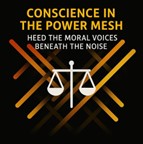
Is there a fundamental morality that lives deep in the soul of each of us in the Mesh—an inner North Star for our actions? Or are we destined to be purely transactional, chasing personal advantage and short-term wins—“survival of the fittest” at its most crass?
This post explores morality—our sense of right and wrong—within The Power Mesh. Philosophers, psychologists, and evolutionary scientists have searched for this inner moral code for centuries. Many now agree that humanity’s ability to survive together rests on a few enduring principles:
Of course, nihilists reject these principles, seeing life as meaningless or purely transactional. And life often presents situations where these values conflict, requiring us to navigate trade-offs and seek the most moral solutions.
As executive educator Hitendra Wadhwa wrote:
“There are deeper truths — truths about who we truly are, and what we are capable of — that science hasn’t yet investigated.”
And the Declaration of Independence reminds us:
“We hold these truths to be self-evident, that all men are created equal, and endowed by their Creator with certain unalienable rights, among these are life, liberty, and the pursuit of happiness.”
These moral truths provide conscience and clarity amid the Babel of voices in The Power Mesh.
Morals are universal inner values—a shared voice of conscience. Experience, not just research, confirms this:
The Power Mesh—the invisible web of influence connecting leaders and followers in politics, business, and everyday life—is rife with competing needs, fears, and ambitions.
Yet, beneath the noise, inner voices of right and wrong stir. Too often, we ignore them or lack the courage to act when the cost feels high. This moral silence feeds cynicism and weakens collective integrity.
Morality can be a unifier in today’s divided world. To explore your own stance, ask yourself:
The Principles:
Life is complex. Moral principles can conflict:
The goal is not purity—it’s integrity:
Moral dilemmas in The Power Mesh demand transparency, dialogue, and courage—from leaders and followers alike. They require looking beyond partisanship and short-term outcomes to the long-term human consequences of our choices.
We each live inside the Mesh of power—woven from our choices, words, and silences.
Today, the Mesh may feel fragile. But if enough of us listen to that quiet voice and translate it into moral action—acts of fairness, courage, compassion, and accountability—we strengthen the fabric of society.
Listen closely. Strengthen your awareness. Know that your actions, not just your opinions, reveal your moral compass.
The Power Mesh will only be as moral as the people who compose it.
Pat McLagan for The Power Mesh

Guiding leaders (and their followers) towards courageous action and ethical leadership.
Copyright © 2024 Patricia A McLagan, All Rights Reserved.
